
Art for the Film Under the Same Moon (2005)
- Go Hayakawa Art – Super Dekoboko
- Bio / CV
- Art for the Film Under the Same Moon (2005)
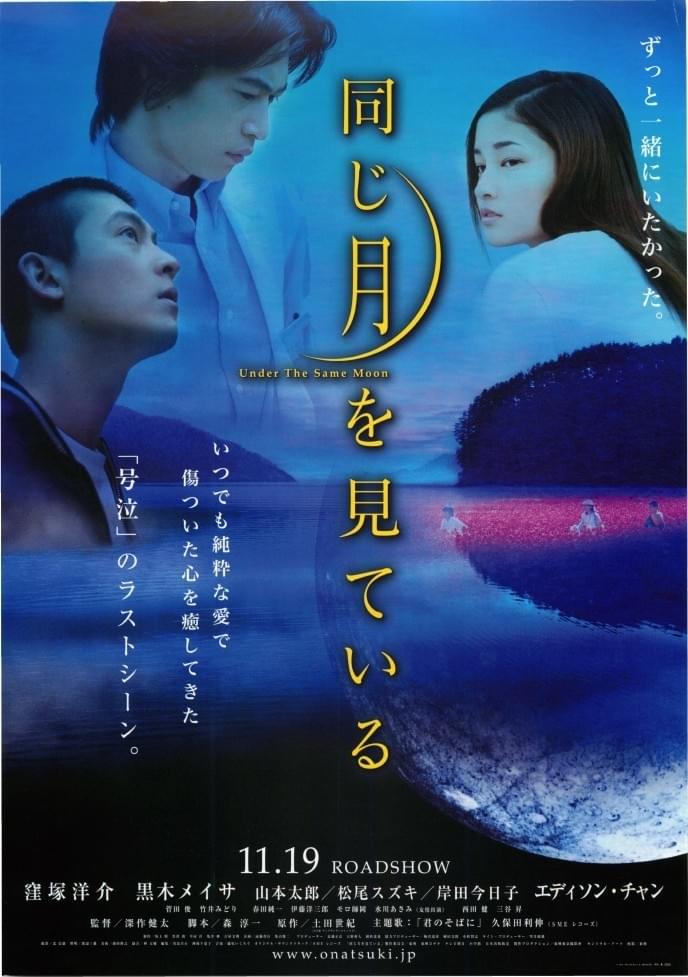
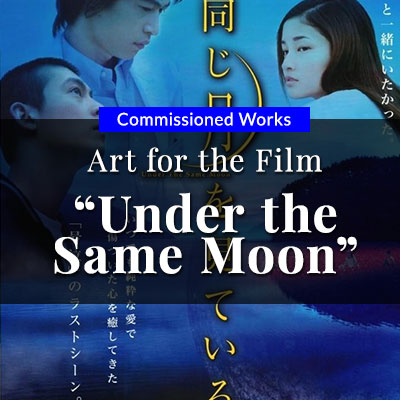
In 2005, Go Hayakawa’s painting appeared in the Japanese feature film Under the Same Moon, directed by Kenta Fukasaku and produced by Toei.
The work was used on screen as a painting created by the character Motoharu “Don-chan” Mizushiro, played by Edison Chen. Within the film’s narrative, it symbolizes the fragile connection between art, emotion, and redemption.
This page presents the paintings featured in the film and a glimpse behind the scenes of their creation.
Film Information
| Title | Under the Same Moon |
|---|---|
| Director | Kenta Fukasaku |
| Cast |
Yosuke Kubozuka (Tetsuya Kumakawa), Edison Chen (Motoharu “Don-chan” Mizushiro), Meisa Kuroki (Emi Sugiyama), Taro Yamamoto (Yusaku Kaneko), and others |
| Distributor | Toei Company, Tokyo |
| Production | Toei / Shogakukan |
| Release Year | 2005 |
Artwork Information
Featured Artwork #1 –
“Flame”
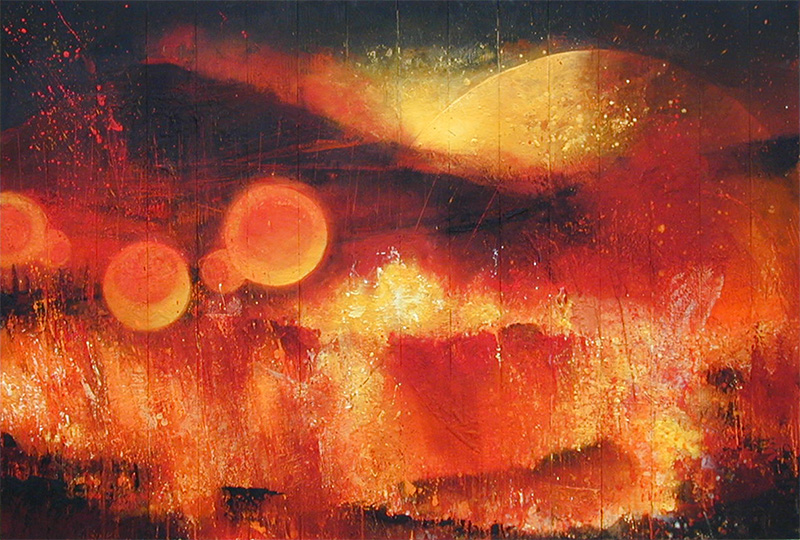
| Title | Flame |
|---|---|
| Year | 2005 |
| Materials | Mineral pigments (Nihonga pigments) and resin on cedar wood panel |
| Size | 75.6 × 51.2 in (192 × 130 cm) |
| Status | Available |
A large, texture-rich painting built around the motif of fire.
Its intense surface and scale carry the film’s core emotions
—passion, destruction, and renewal—toward the story’s climax.
Featured Artwork #2 –
“Pine Tree”
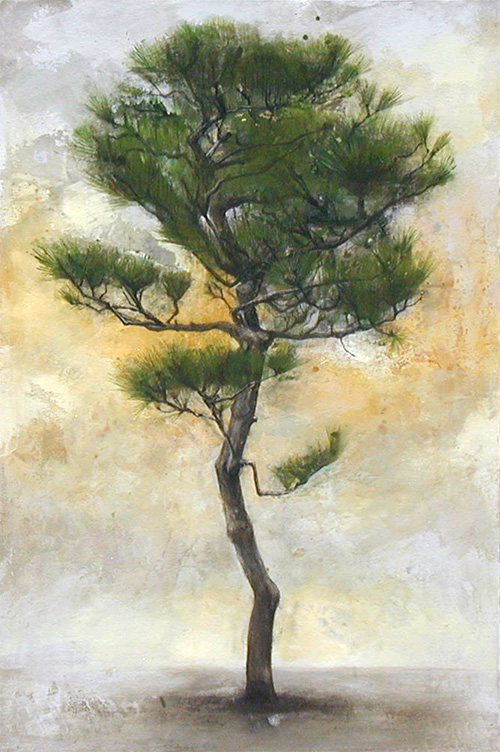
| Title | Pine Tree |
|---|---|
| Year | 2005 |
| Materials | Mineral pigments (Nihonga pigments) and resin on watercolor paper |
| Size | 35.4 × 23.6 in (90 × 60 cm) |
| Status | In artist’s collection |
Depicting a young pine at daybreak,
the work appears as a gift within the narrative,
conveying encouragement, perseverance, and renewal
—qualities traditionally associated with the pine in Japan.
Featured Artwork #3 –
“Pinecone” (Watercolor)
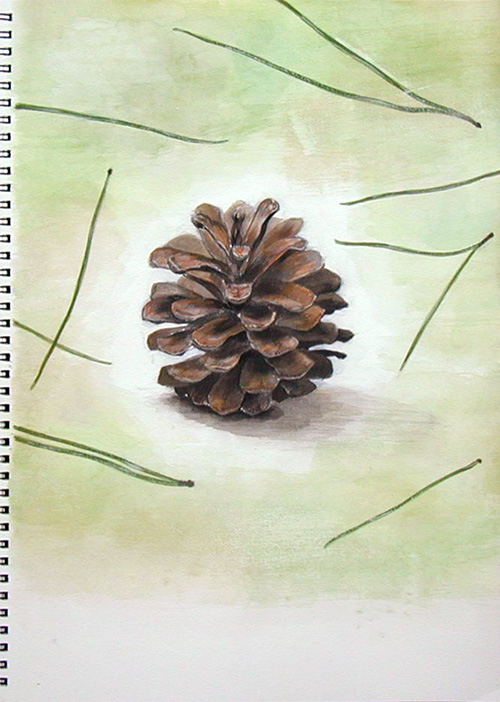
| Title | Pinecone |
|---|---|
| Year | 2005 |
| Materials | Watercolor on sketchbook paper |
| Format | Sketchbook page |
| Status | No longer in artist’s collection |
A small, candid watercolor used on screen as a sketch made by the character.
In the finished prop, a handwritten “Arigato” (“Thank you”) appears,
underscoring the film’s theme of simple sincerity.
Featured Artwork #4 –
“Temple Gate” (Pencil Sketch)
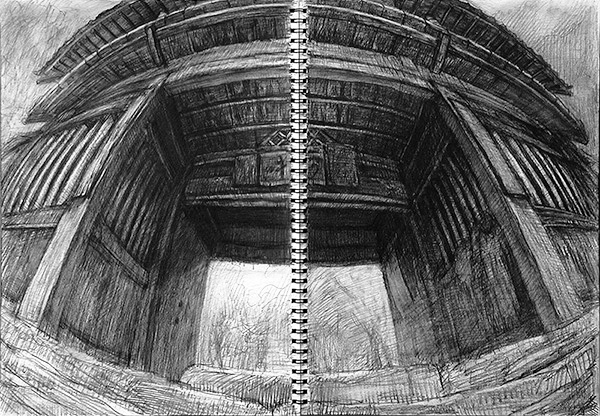
| Title | Temple Gate |
|---|---|
| Year | 2005 |
| Materials | Pencil on sketchbook paper |
| Format | Sketchbook page |
| Status | No longer in artist’s collection |
This pencil drawing of a temple gate is rendered from a steep upward angle—
almost as if viewed through a fisheye lens—creating a sense of awe
and confrontation with fate within the scene.